How the World Eats / Chapter 3 of 8
Key marketsWho feeds the world, who depends on it, and who moves the price
A handful of countries supply most of what the world trades. A larger group depends on them. A few, on either side, are big enough that their decisions move prices for everyone. Knowing which is which is the fastest way to read a food market.

Importance is measured in trade, not production
The largest producer of a food is often not the most important country in its world market.
India produces more milk than any other country, but exports very little of it (Chapter 2). China is one of the world's largest food producers, and also one of its largest importers. What matters for world prices is not how much a country grows, but how much it adds to or takes from international trade, and how much that can change from one year to the next.
So this chapter looks at markets through their role in trade. Four roles cover most countries.
- Breadbasketsproduce far more than they need and supply the world market.
- Dependent importerscannot grow enough and rely on the world market for important parts of their diet.
- Swing playersare large enough that a change in what they buy or sell moves world prices.
- Hubsmove, process and re-export food that is grown and eaten elsewhere.
These four roles are GFO's working categories, built from terms the trade already uses. They are not a formal classification, and many countries play more than one role at once.
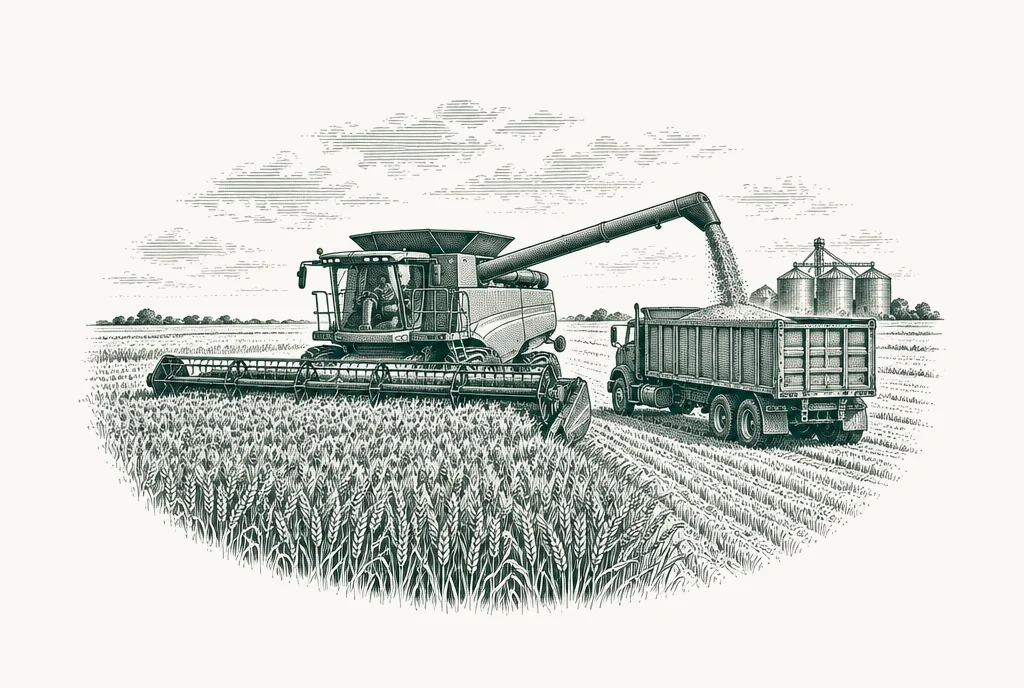
Breadbasketsthe exporters the world relies on
- Examples
- United States, Brazil, Argentina, Canada, EU, Russia, Ukraine, Australia, New Zealand, Indonesia, Malaysia, Thailand, Vietnam, India
- Main categories
- Grains, oilseeds, meat, dairy, sugar, palm oil, rice
- What moves them
- Harvests, weather, currency, export policy
A small number of regions supply most of the food that crosses borders.
The Americas. The United States, Brazil, Argentina and Canada are among the world's largest exporters of grains, oilseeds, meat and sugar. Brazil in particular has grown into a dominant supplier of soybeans, sugar, beef, poultry and coffee over the past two decades (Chapter 2).
The European Union. The EU is both a major exporter and a major importer. In 2025 it exported €238.2 billion of agricultural products and imported €213.5 billion 3. It sells dairy, pigmeat, wheat, wine and processed foods, and buys soymeal, tropical products and feed.
The Black Sea. Russia and Ukraine became major grain exporters in the 2000s and 2010s. Russia is the world's largest wheat exporter, and its main markets are in the Middle East, North Africa and Central Asia 8. Ukraine is a large exporter of corn, wheat and sunflower oil, though the war has disrupted its exports since 2022.
Oceania. Australia and New Zealand export far more food than they consume. Australia is a major supplier of wheat, barley, beef and sheepmeat. New Zealand is one of the largest exporters of dairy.
South and Southeast Asia. Indonesia and Malaysia supply most of the world's palm oil. Thailand, Vietnam and India dominate rice exports, with India alone projected to account for about 40% of world rice trade in 2026 5.
For exporting countries, food is a major source of export earnings, and farm policy is also trade policy. When a breadbasket has a poor harvest, the effect is felt in importing countries far away.
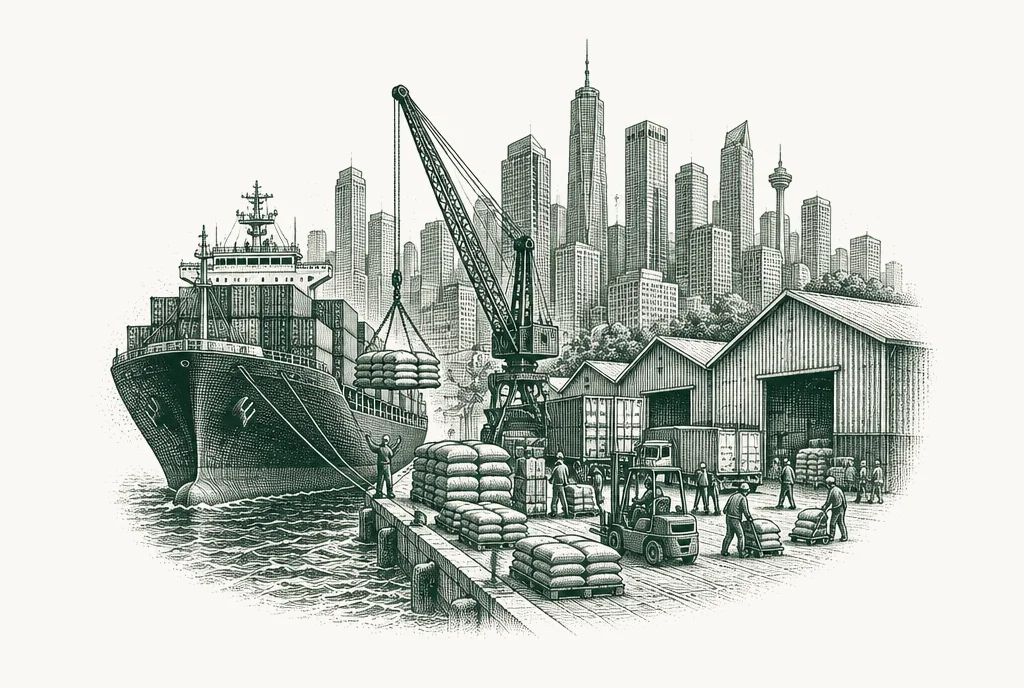
Dependent importersthe countries that rely on world markets
- Examples
- China, Japan, South Korea, Egypt, Algeria, Saudi Arabia, Iran, the Philippines, much of Sub-Saharan Africa
- Main categories
- Grains, oilseeds, meat, dairy, vegetable oils
- What moves them
- Tenders, stocks, currency, import rules
Many countries cannot grow enough of what they eat, because of limits on land, water or climate, or because their populations and incomes have grown faster than their farms.
China. China is the most important importer in the system. Its agricultural imports were worth US$207.41 billion in 2025 2. The US Department of Agriculture describes it as the world's second-largest importer of agricultural products 7. It buys soybeans, meat, dairy, grains, fruit and seafood, and it is covered further below as a swing player.
Japan and South Korea. Both are wealthy, densely populated and heavily dependent on imports. Japan produced only 38% of the calories it consumed in fiscal 2024 4. By comparison, the same ministry estimates that Australia, Canada, France and the United States produce more than 100% of what they consume 4.
The Middle East and North Africa. This is the most import-dependent region in the world for staple foods. Water is scarce, arable land is limited, and populations have grown quickly. Egypt, Algeria, Saudi Arabia and Iran are large importers of wheat, feed grains, vegetable oils, dairy and meat. Egypt is one of the main buyers of Russian wheat 8.
Sub-Saharan Africa. Many countries in the region import rice, wheat, vegetable oils and milk powder. Demand is growing quickly because the population is young and growing. Chapter 5 covers this in more detail.
Southeast Asia. The Philippines and Indonesia are large importers of rice, wheat and dairy, even though parts of the region are also major exporters.
For importing countries, food security depends on access to world markets. Governments often hold strategic stocks, sign long-term supply agreements, and buy through state agencies to reduce that exposure.

When the biggest buyer steps back, or the biggest seller closes the door, everyone pays a different price.
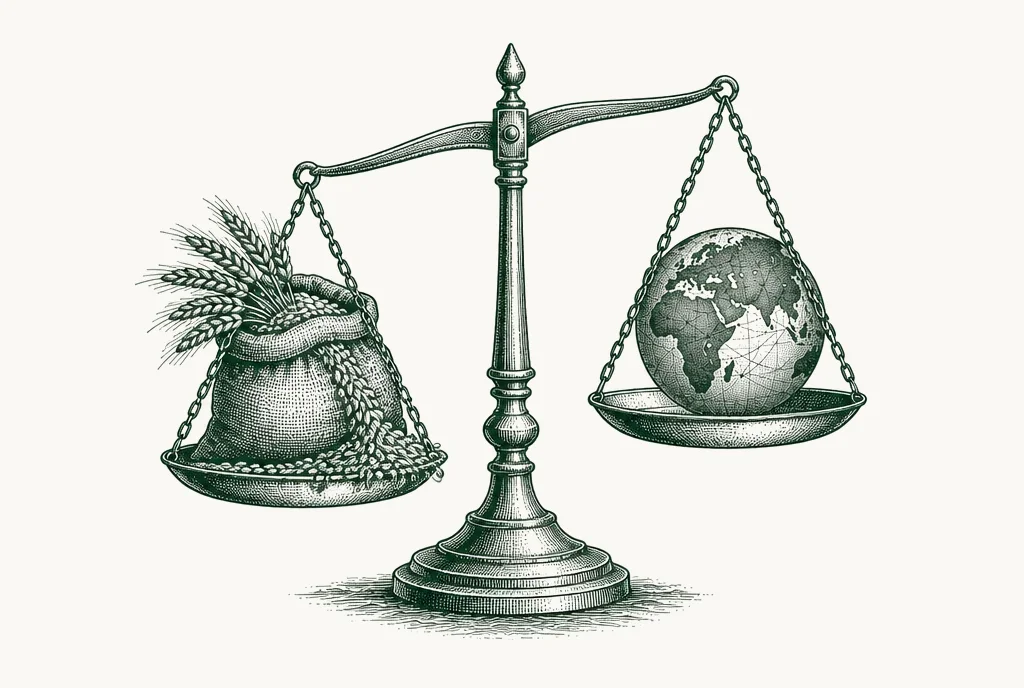
Swing playersbig enough to move the price
- Examples
- China (buyer), India, Russia, Indonesia (sellers)
- Main categories
- Soybeans, grains, rice, wheat, sugar, palm oil
- What moves them
- Government policy, domestic prices, trade disputes
Some countries are big enough that when they change course, the whole market feels it. They can be buyers, sellers, or both.
China, the swing buyer. Because China buys so much, small changes in its demand have large effects. In 2025, China's grain imports fell 10.8% to 140.6 million tonnes, while soybean imports reached a record 112 million tonnes 1. Within that total, corn imports fell 81% and wheat imports fell 65% 1.
Swings of that size change the outlook for exporters on the other side of the world. A strong domestic harvest, a policy decision to protect Chinese farmers, or a trade dispute can each shift Chinese buying sharply.
India, the swing seller. India is a very large producer of rice, wheat and sugar, and its government is willing to restrict exports to protect domestic consumers. India banned wheat exports in 2022. It restricted rice exports in 2023, and its rice exports fell as a result 6. Because India is such a large share of the world rice market, those decisions moved prices for importers everywhere.
Russia, the policy exporter. Russia manages its grain exports through export taxes and, at times, quotas. That gives the Russian government a direct lever over world wheat supply and prices.
Indonesia, the palm oil lever. Indonesia is the world's largest palm oil producer. In 2022 it briefly banned palm oil exports to bring down domestic cooking oil prices, which unsettled the whole vegetable oil market. It also uses biodiesel blending rules that take more palm oil off the export market.
The common thread is that swing players are often governments, not just harvests. Their decisions are driven by domestic politics: keeping food affordable at home, supporting farmers, or responding to trade disputes. Those decisions can arrive with little warning.
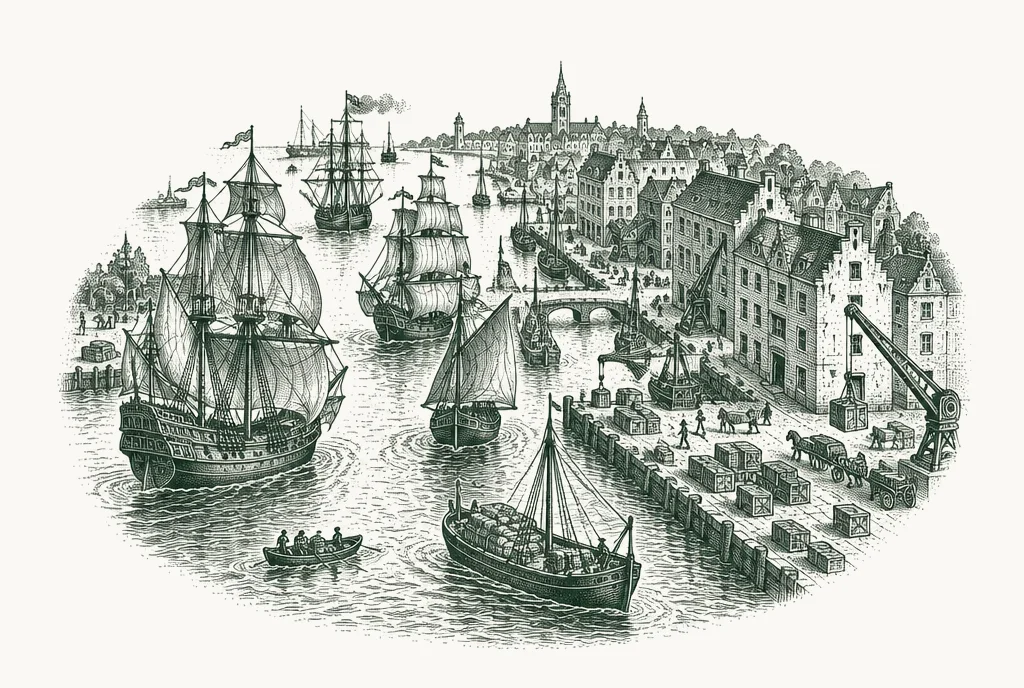
Hubswhere food passes through
- Examples
- Netherlands, Singapore, UAE, processing centres in Asia and Europe
- Main categories
- Processed food, seafood, re-exports
- What moves them
- Logistics, rules of origin, trade agreements
Some countries are important not because they grow or eat a lot, but because food passes through them.
Trading and logistics hubs. The Netherlands is one of the world's largest agricultural exporters by value, partly because a large share of what it exports was first imported, processed or repacked there. Rotterdam is a gateway for food entering and leaving Europe. Singapore and the United Arab Emirates play similar roles in Asia and the Middle East, as trading centres, re-export points and places where regional food businesses are headquartered.
Processing hubs. Some countries import raw materials and export finished products. Seafood is the clearest case: fish caught or farmed in one country is often processed in another before being sold in a third (Chapter 2). Southeast Asian countries play this role for seafood, and several European countries do so for coffee, cocoa and dairy ingredients.
Hubs matter because disruption there affects trade that has nothing to do with local supply or demand. A port closure, a change in re-export rules, or a new trade restriction at a hub can reroute flows far beyond its borders. They also complicate trade data. A product recorded as a Dutch export may have been grown in Brazil or Kenya.
The roles side by side
| Role | Examples | Main categories | What moves them |
|---|---|---|---|
| Breadbaskets | United States, Brazil, Argentina, Canada, EU, Russia, Ukraine, Australia, New Zealand, Indonesia, Malaysia, Thailand, Vietnam, India | Grains, oilseeds, meat, dairy, sugar, palm oil, rice | Harvests, weather, currency, export policy |
| Dependent importers | China, Japan, South Korea, Egypt, Algeria, Saudi Arabia, Iran, the Philippines, much of Sub-Saharan Africa | Grains, oilseeds, meat, dairy, vegetable oils | Tenders, stocks, currency, import rules |
| Swing players | China (buyer), India, Russia, Indonesia (sellers) | Soybeans, grains, rice, wheat, sugar, palm oil | Government policy, domestic prices, trade disputes |
| Hubs | Netherlands, Singapore, UAE, processing centres in Asia and Europe | Processed food, seafood, re-exports | Logistics, rules of origin, trade agreements |
Many countries appear in more than one row. India is both a breadbasket and a swing seller. China is both a dependent importer and a swing buyer. The EU exports and imports on a very large scale.
How to use this when reading signals
When a GFO signal reports a development in a particular country, its role tells you where to look for the consequences.
- A poor harvest in a breadbasket tightens supply for importers everywhere, and often helps competing exporters.
- A policy change in a dependent importer changes demand for the exporters that supply it.
- A decision by a swing player can move world prices on its own, often faster than any harvest.
- A disruption at a hub can reroute trade flows even if supply and demand are unchanged.
Chapter 4 follows the food itself: the routes it travels between these markets, and the chokepoints where it is most exposed.
Sources
- China General Administration of Customs, 2025 grain import data, as reported by SunSirs, 22 January 2026.↩
- China Ministry of Agriculture and Rural Affairs, 2025 agricultural trade data, as reported by SunSirs, 23 January 2026.↩
- Eurostat, EU trade in agricultural products 2025, March 2026.↩
- Japan Ministry of Agriculture, Forestry and Fisheries, food self-sufficiency rate for fiscal 2024, as reported by Jiji Press, 10 October 2025, and Reuters, October 2025.↩
- USDA ERS, Rice Outlook, May 2025.↩
- USDA ERS, Rice Sector at a Glance.↩
- USDA FAS, China: Exporter Guide Annual 7, 3 July 2026.↩
- USDA FAS, Grain: World Markets and Trade, July 2023.↩
Last reviewed 21 September 2026
See the system move, every week.
GFO's weekly signal summary tracks the developments that matter across price, trade, supply, biosecurity, regulation and climate. Free, no card required.